



Spec Spotlight: The skinny on narrow width products
9 projects that prove fine detailing with Real Cedar can transform modern forms
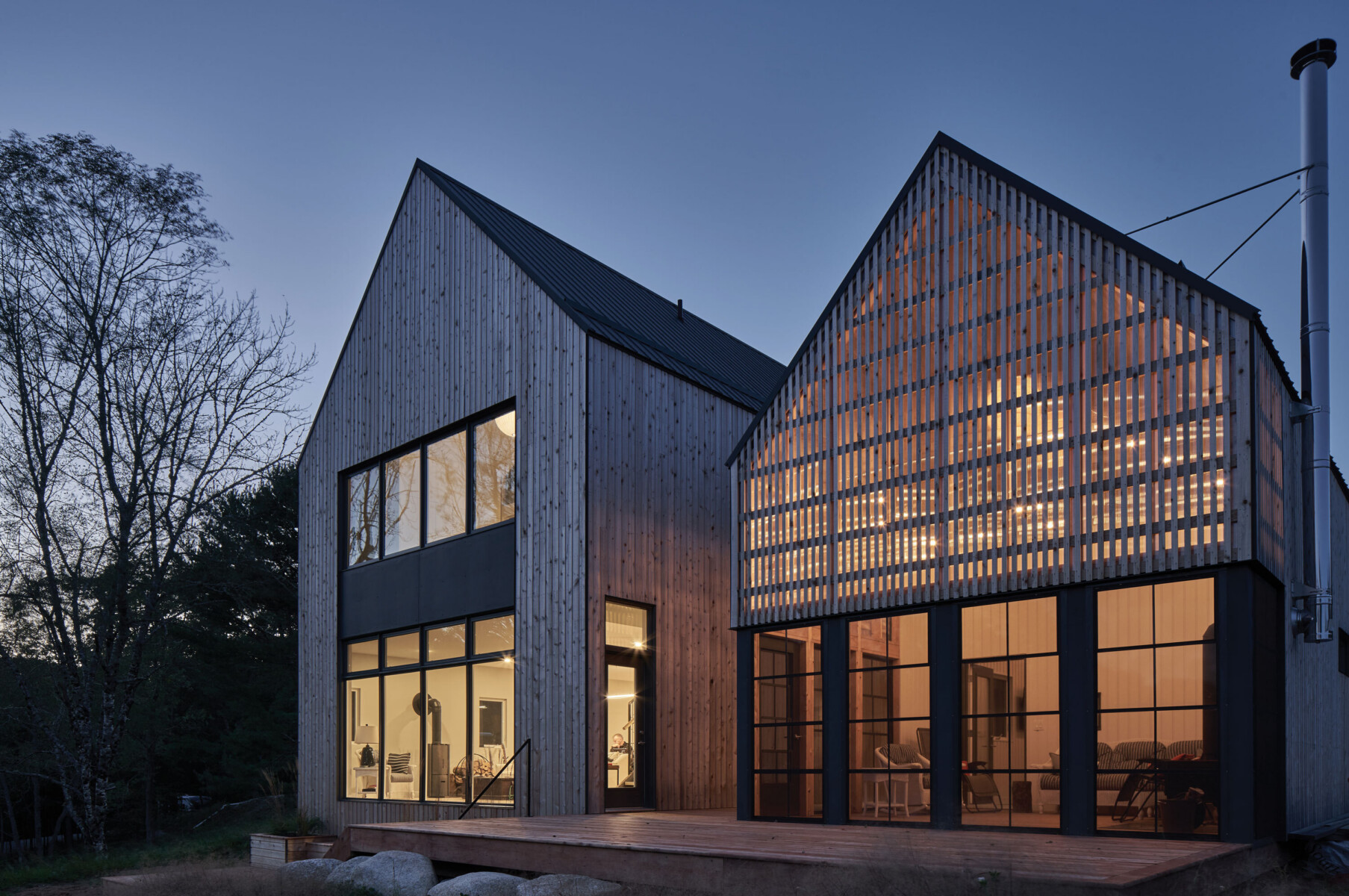
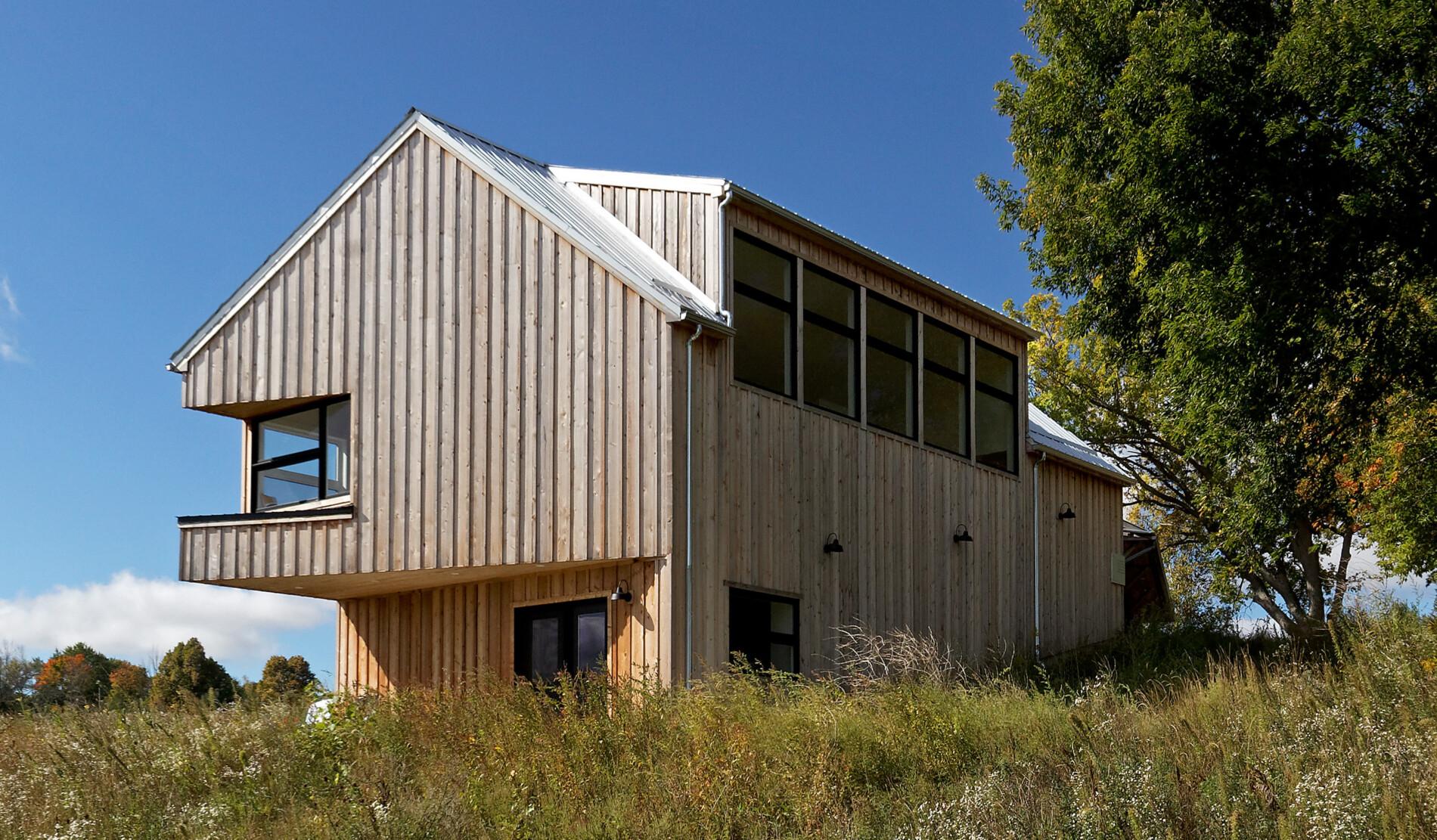
Photo: The Monocular by RHAD Architects, photo by Julian Parkinson, Format Films
Narrow width products and patterns are having a big moment—and for good reason. 2″ – 6″ wide Real Cedar products give designers an easy way to add precision, rhythm, and depth without changing the overall form. Used as cladding, finishing boards, screens, soffits, or entry portals, “narrows” sharpen edges, break down scale, and make modern massing feel warmer and more tactile—up close and from the street.
They also excel at what architects love most: light-and-shadow performance. The tighter spacing and repeated profiles create shadow-line articulation—a subtle interplay of light and shade that shifts throughout the day, adding movement and legibility to otherwise flat planes.
And like all Real Cedar lumber, narrow width products are a high-performance, environmentally responsible choice that readily accepts and holds a wide range of finishes—making it easy to dial in any look, from clear and natural to bold, dark stains.
The projects below show how Real Cedar in narrow formats can do the quiet work that makes contemporary architecture land: cleaner lines, richer texture, and detailing that reads as intentional—not busy.
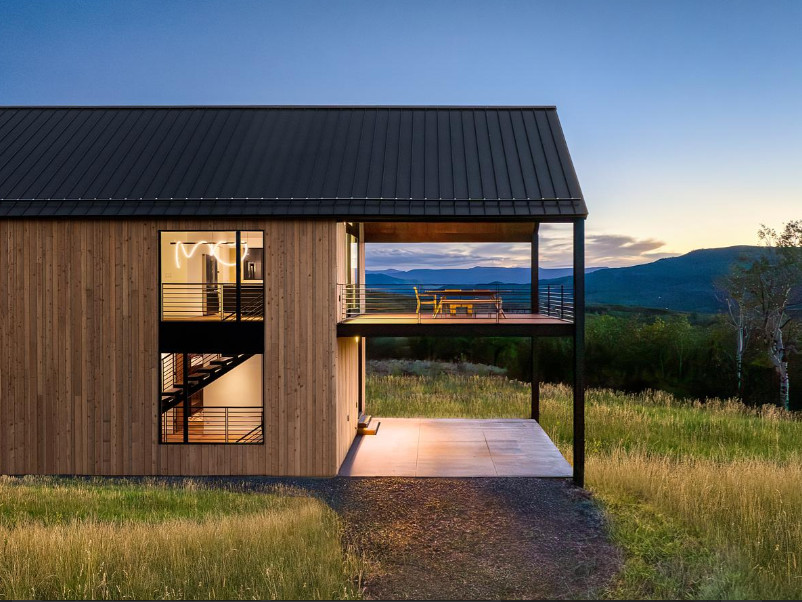 Photo: Dan Tullos for The Scout Guide Boulder and Ian Warren
Refines Rustic Simplicity
In Steamboat Springs, Colorado, architect Laura Marion conceived Sleeping Giant Ranch as a year-round family retreat with a light footprint and a durable envelope tuned to mountain weather. Clad in random widths of Select Knotty Real Cedar—including narrow 1x4s—the simple barn form gains a finer surface grain: tight vertical lines sharpen shadow and depth at openings, temper the building’s scale, and lend the façade a quiet, crafted presence that sits comfortably in its ranchland setting.
“The simple, modern building is enhanced by the interest, range of color and texture of cedar.”— Laura Marion, AIA
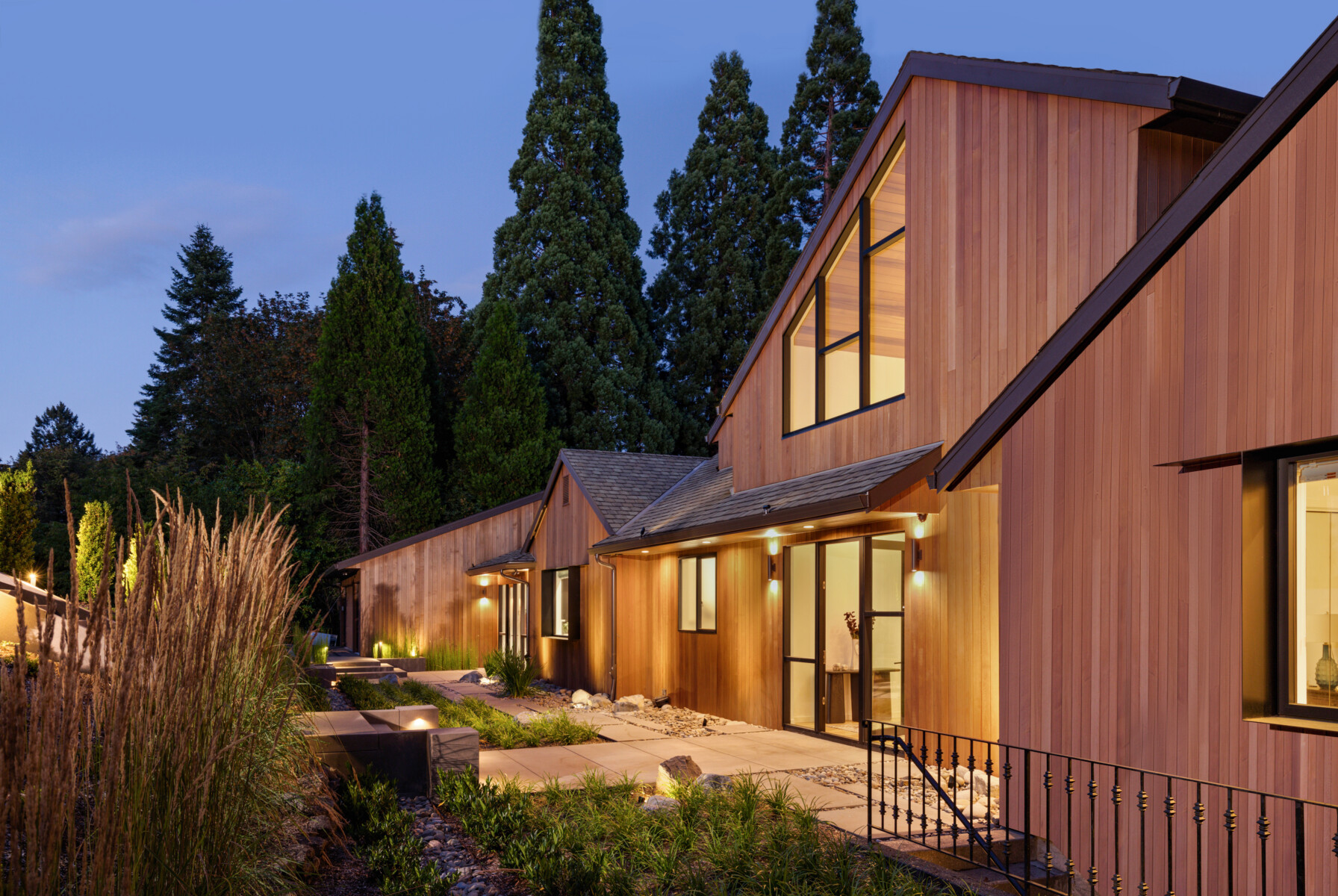
Photo: David Papazian
Modernizes Gabled Form
A tight, winding approach through Portland’s West Hills sets up Hilltop House, where Giulietti Schouten Weber Architects reworked an ’80s tract home into a modern urban residence with a bolder, more legible front elevation. The designers specified vertically installed 1×4 Real Cedar Fineline T&G across the façade—narrow boards that sharpen the architecture’s lines, letting the sawtooth roof forms and angled windows read with more precision and contrast. The result is a warm, continuous skin that feels simultaneously graphic and grounded, turning the entry into a clear moment of arrival without visual clutter.
“Cedar is readily available and works well with different modern types of design from ranch style or MCM styles to the more modern urban designs.” — Tim Schouten, AIA
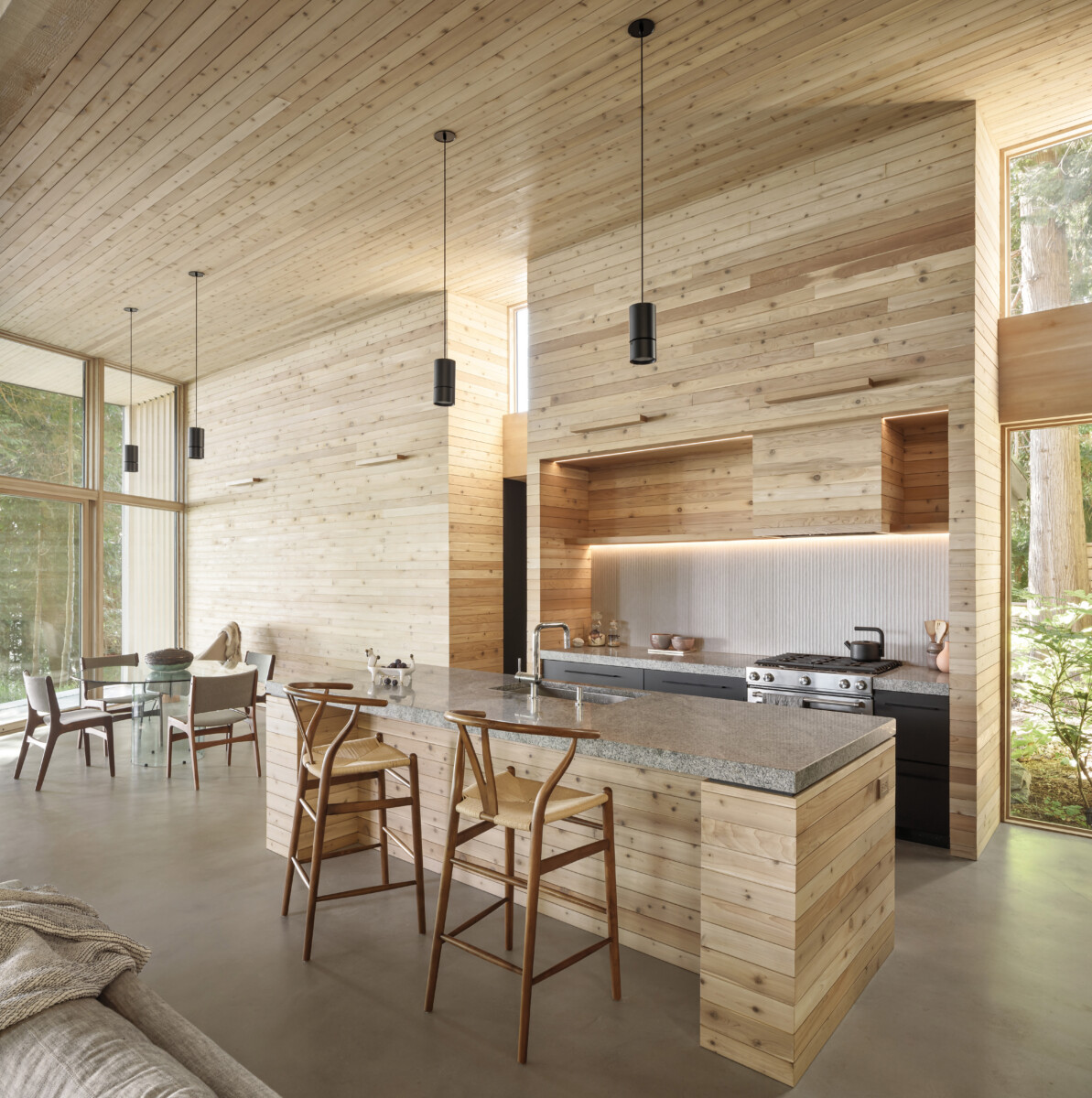
Photo: Ema Peter
Enhances Interior Spaces
Designed and built as a retreat from the city, Halfmoon Bay Cabin on the Sunshine Coast of BC, Canada, by architect Patrick Warren, treats cedar not as an accent but as an atmosphere. Narrow 1×4 smooth-face V-joint T&G becomes the project’s unifying element indoors—wrapping soffits and interior surfaces in a fine, consistent rhythm that makes the roof planes feel continuous and sheltering, while letting views and glass read as lighter narrow width products through the envelope. Paired with knotty and clear grades elsewhere, the slim profiling brings warmth and texture up close, turning everyday moments—cooking, moving through halls, pausing under cover—into a more tactile, immersive experience of the site.
“The project would have a completely different character without the use of cedar. It is actually impossible to imagine the project without it.” — Patrick Warren, Architect
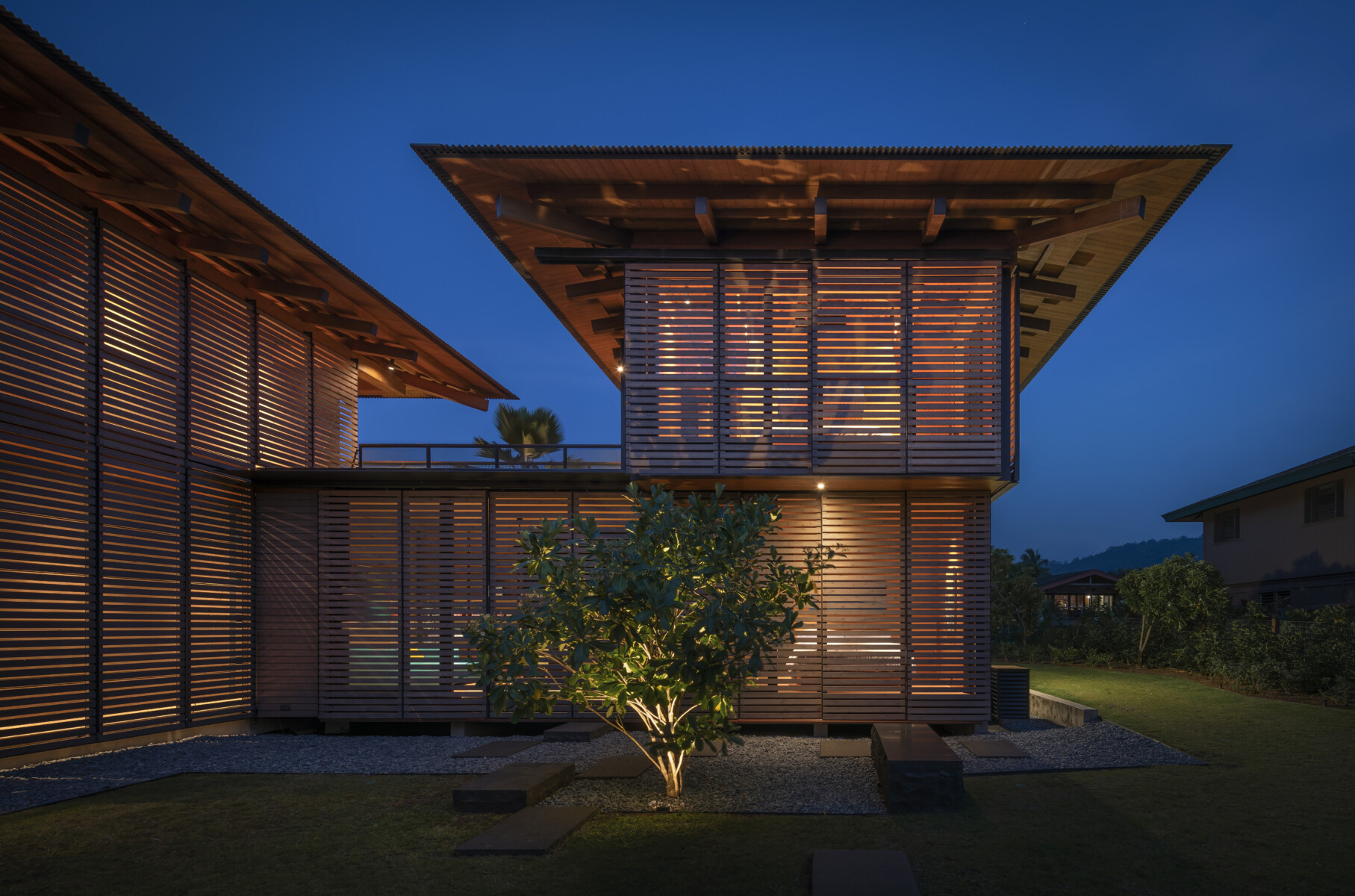
Photo: Aaron Leitz
Creates Soft Privacy
At Hale Napo’o in Hanalei, Hawaii, Olson Kundig designed a family retreat for a Bay Area couple with three children—one that can open fully to ocean breezes and long views, then secure itself when the family is away. The project’s custom shutter system uses narrow 1×4 Western Red Cedar slats set within a steel frame, turning the exterior into a tunable screen rather than a fixed wall. In use, the slim members temper glare and sightlines while still admitting air; after dark, their tight spacing filters interior light into a lantern-like glow that gives the house presence without exposure.
“We selected Western Red Cedar for the warm look and feel and its natural weather resistance.” — Tom Kundig, FAIA, RIBA, Design Principal<
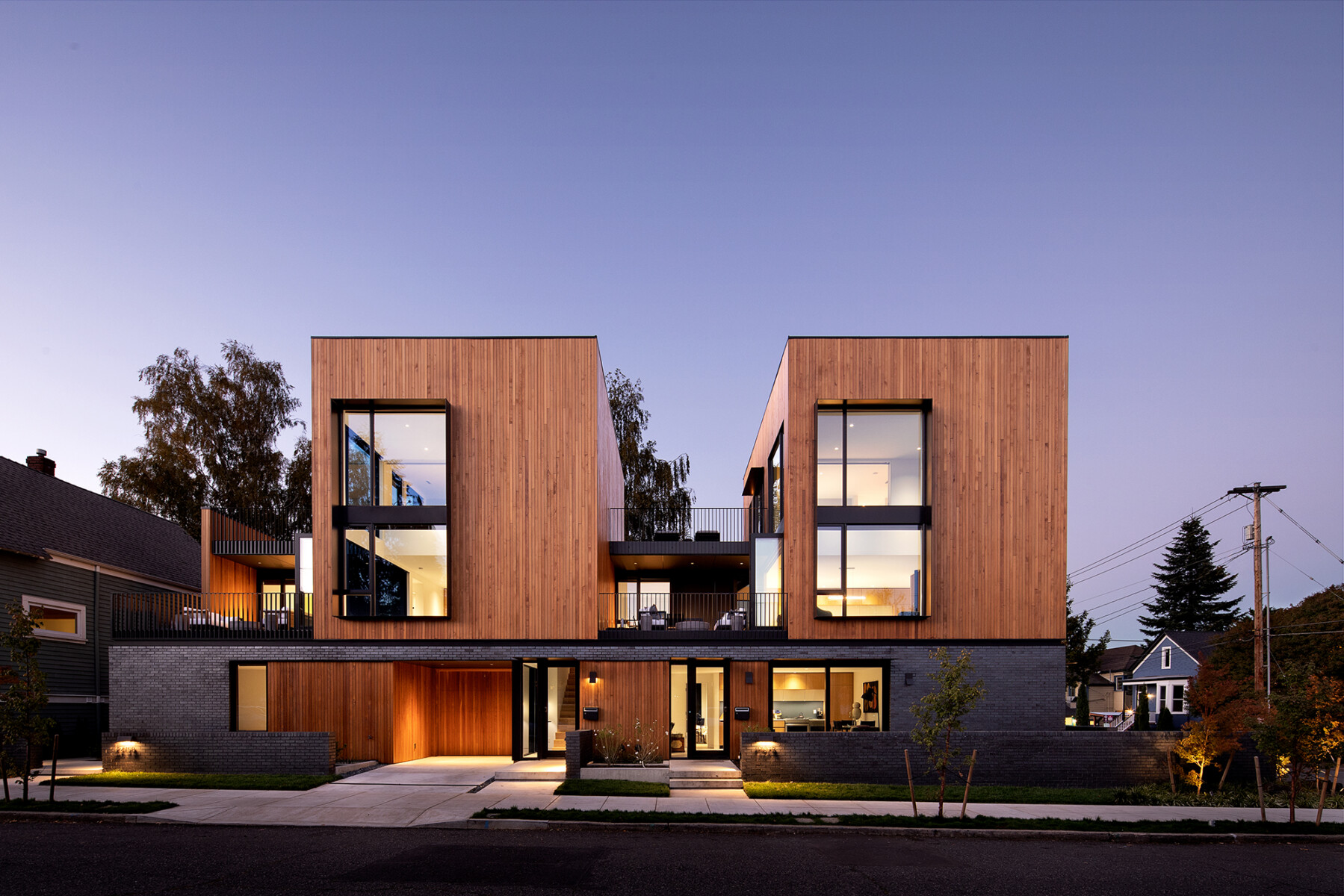
Photo: Jeremy Bittermann
Brings Scale into Focus
On a compact lot, Slabtown 4 (as featured in Cedar Book 18) by Scott Edwards Architecture stacks two townhomes above two ADUs, reading as crisp, two-level cedar volumes set on a brick datum that matches the neighborhood’s mixed residential-and-industrial cadence. Wrapped in 1×4 fine line cedar (smooth-face front, resawn back), the narrow-board module gives the façade a finer grain—so the larger boxes feel more calibrated to the street, with shifting tone and texture that keeps the massing from reading as a single, monolithic plane.
“The natural variation in the boards helps to break down the scale and adds texture to the two-story wood boxes.” — Rick Berry, Principal
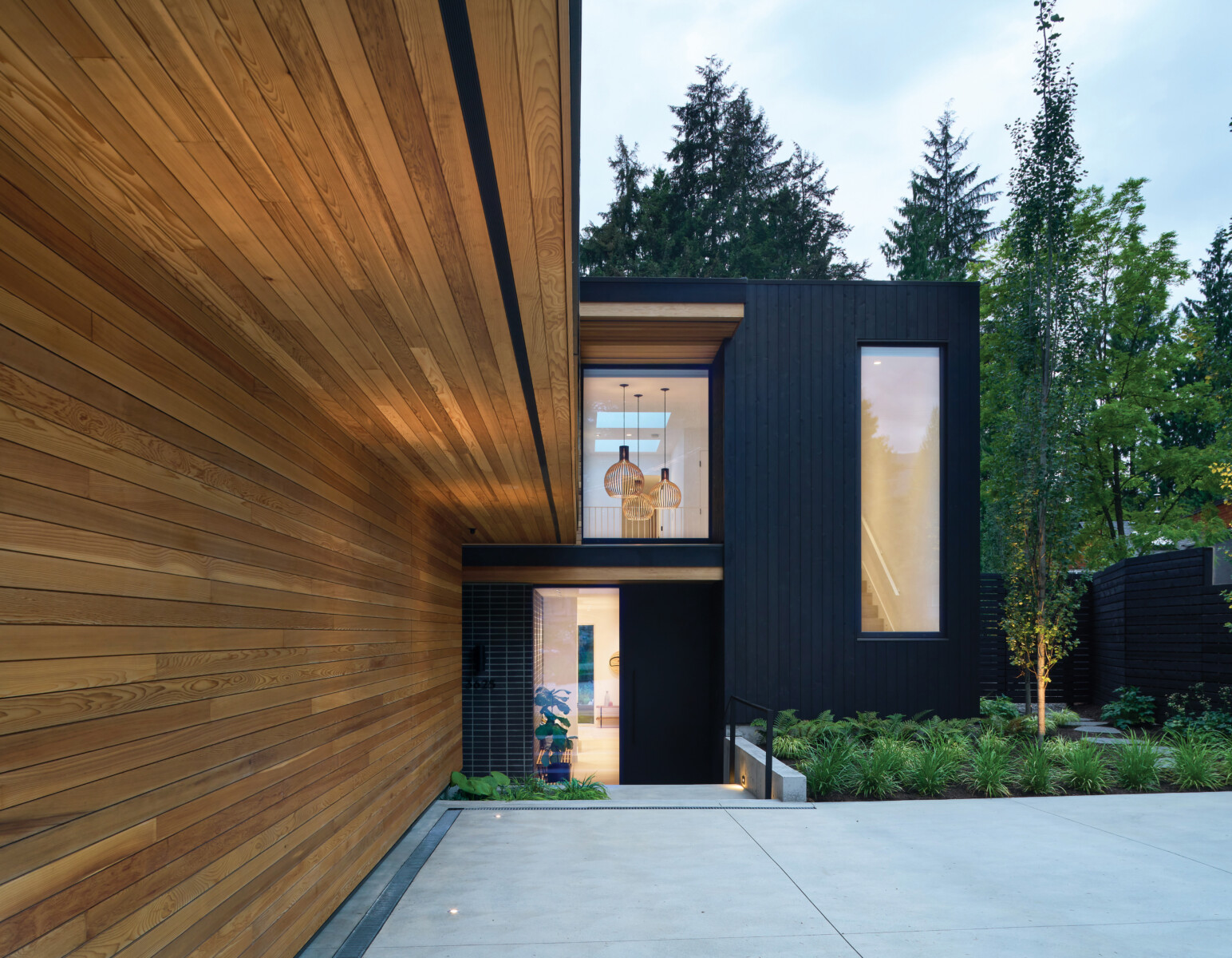
Photo: Sama Jim Canzian
Creates Showstopping Soffits
Blue Bonnet by Shelter Residential Design illustrates how narrow cedar detailing can do the heavy lifting in a restrained exterior palette. For this North Vancouver residential project, Real Cedar shiplap is deployed in contrasting grades and finishes—KD Select Knotty for black-stained vertical boards and clear mixed grain for clear-coated horizontal boards and soffits—so the façade reads layered, warm, and tactile. The narrow runs culminate overhead in soffits with real visual depth, turning the entry sequence into a standout architectural moment.
“We liked the variation and warmth of the clear mixed grain for the clear coated horizontal boards and soffits.” — Mark Simone
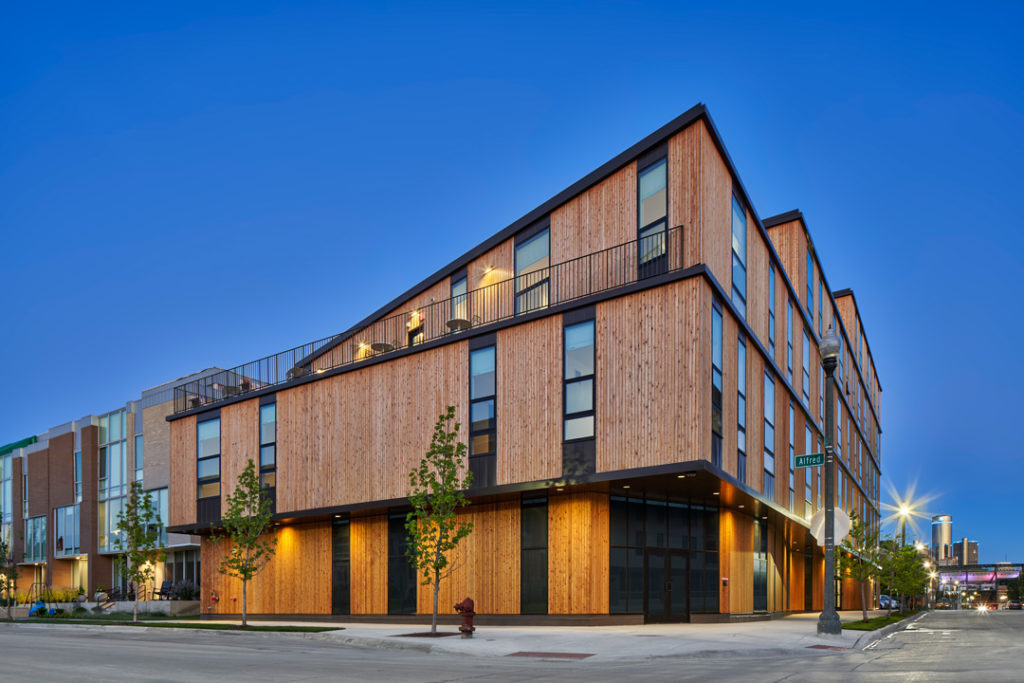
Photo: Jason Keen
Inspires Rhythmic Facades
For John R 2660 in Detroit’s historic Brush Park, Lorcan O’Herlihy Architects (LOHA) used narrow 1×4 Western Red Cedar T&G with a 1/4″ reveal to give the mixed-use building a crisp, vertical cadence that plays against expansive floor-to-ceiling glazing at street level. The thin-board rhythm brings warmth and texture to the ground-floor retail, while reading as a series of framed panels and horizontal bands from a distance—helping the building feel grounded in its neighborhood while still distinctly contemporary.
“The use of cedar is a defining feature and has given the project a unique character that simultaneously fits the context while standing out.” — Lorcan O’Herlihy, FAIA
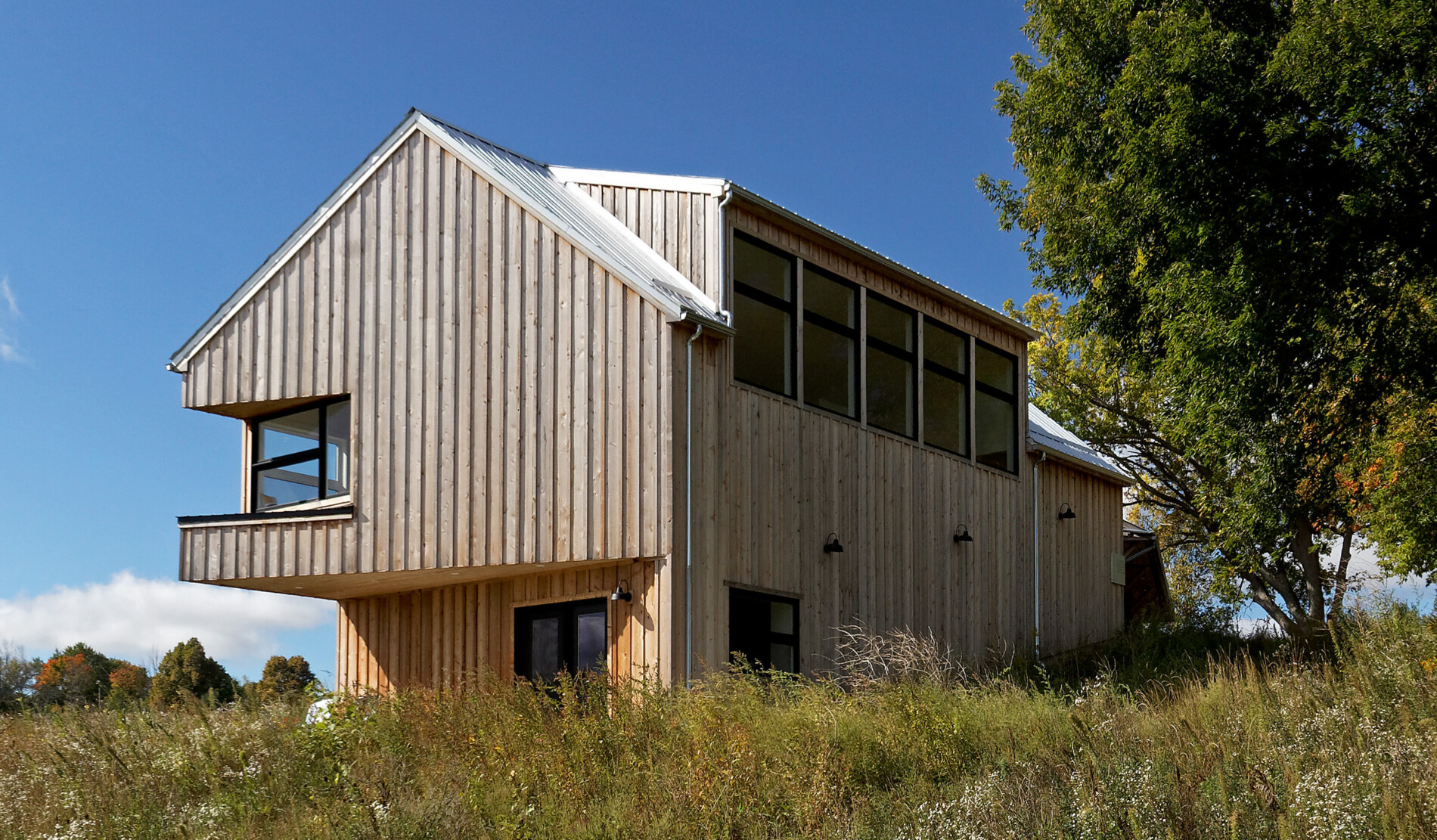
Photo: David Whittaker
Adds Shadow-Line Texture
Art Barn by Weiss Architecture and Urbanism Limited uses Select Knotty Western Red Cedar board-and-batten to bridge contemporary form with the area’s agricultural language. Wide 1×8 boards establish a calm field, while the narrow 1×2 battens sharpen the façade with a steady cadence—adding depth, emphasizing height, and setting the building up to weather gracefully
into its landscape.
“As cedar ages, it becomes even more beautiful, and its durability goes hand in hand with its aesthetic appeal.” — Kevin Weiss, architect
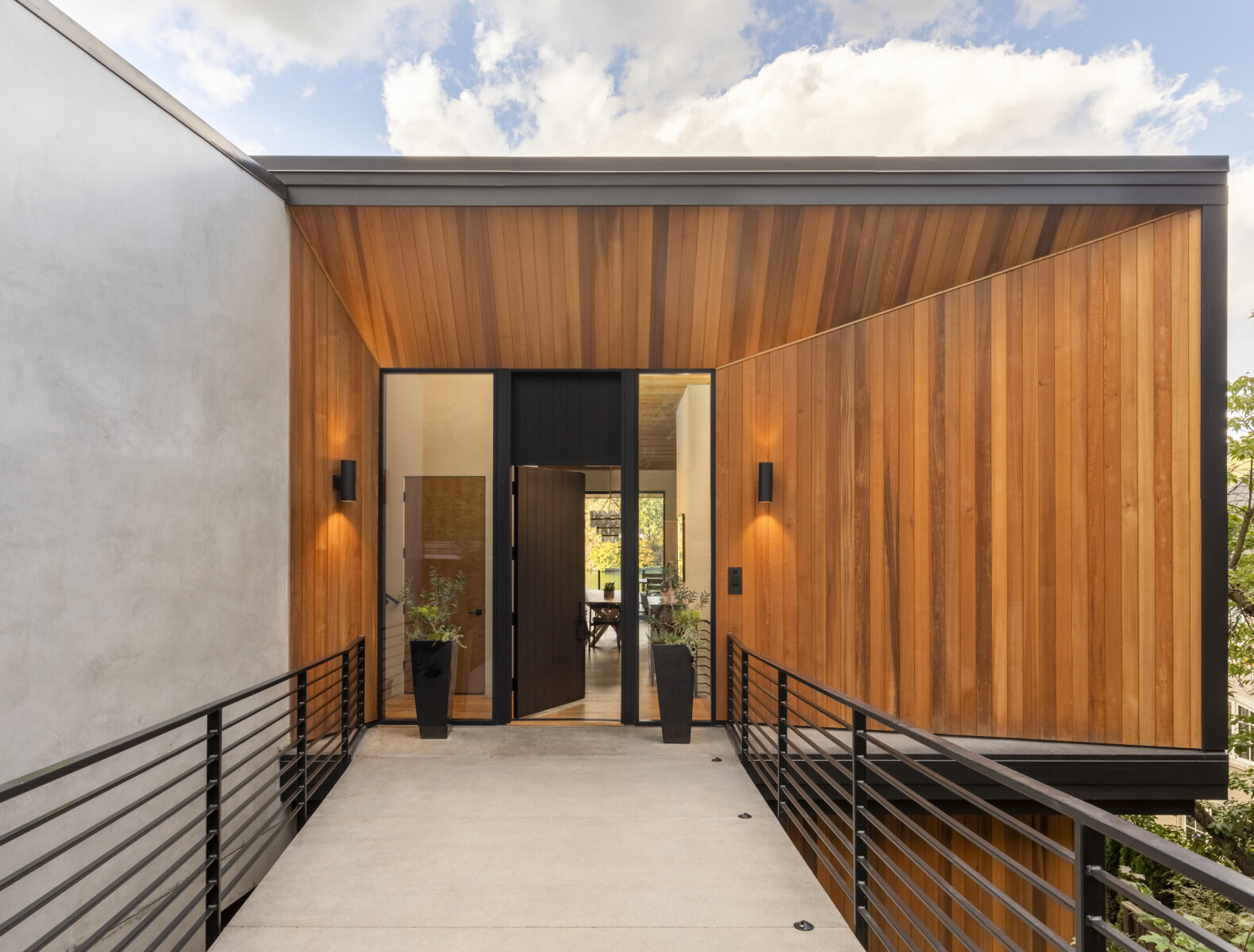
Photo: David Papazian
Defines Focal Points
Lake Front House is a waterfront home in northern Oregon that uses Western Red Cedar fineline T&G (1×4) to turn the street-facing entry into the home’s signature moment. Detailed as an inlaid cedar surround that runs seamlessly from wall to soffit, the narrow boards create warm contrast and a crisp, contemporary cadence—elevating curb appeal with clean lines and finely
scaled texture.
“We always strive for timelessness in design, and using natural materials like Western Red Cedar is one of the best ways of achieving that.” — Jake Weber, AIA