


Western Red Cedar Determined Most Sustainable Building Material
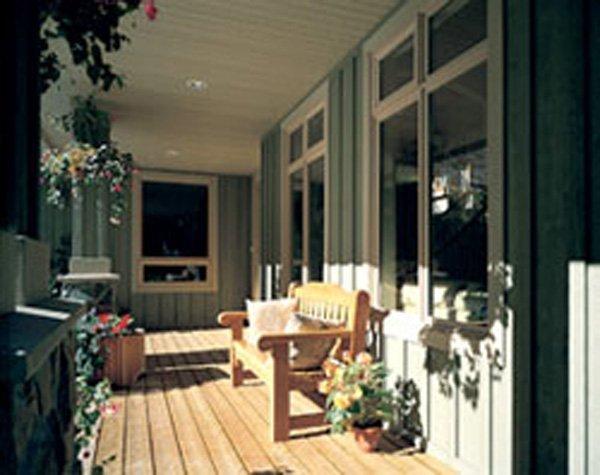
New Study Shows Wood Can Improve Environmental Footprint When Used For Decking and Siding
VANCOUVER, B. C., January 20, 2010
Western Red Cedar, already lauded for its durability, beauty and value, can now add most environmentally sound siding and decking material to its attributes, according to a newly released life cycle assessment (LCA).
Measured against competitive, alternative non-wood building materials for residential decking and siding applications, the LCA performed by Canada’s leading forestry research laboratory, FPInnovations-Forintek, measured the environmental impact of various materials from cradle to grave. The LCA was commissioned by the Western Red Cedar Lumber Association. Complex analysis was conducted on Western Red Cedar, WPC decking, brick, fiber-cement and vinyl against a range of measurables such as resource use, water use, energy use, transportation and waste created. Western Red Cedar substantially outperformed in every category.
“As green building regulations become the standard in building, consumers who previously favored more ‘maintenance-free’ materials as their siding and decking products of choice will need to consider alternatives such as Western Red Cedar to help lessen their environmental footprint,” said John Wagner, a nationally recognized green and sustainability consultant. “Knowing that the LCA proved alternataive building materials like WPC decking, brick, fiber-cement, and vinyl create more envionmental burden and consume more non-renewable fossil fuel during their life cycles helps me feel confident in recommending Western Red Cedar as the most sustainable building tool for my clients and consumers everywhere.”
LCA test results proved:
- Western Red Cedar decking had by far the least environmental impact when compared with both virgin and recycled wood-plastic composite decking products.
- Environmental impact results remained strongly favorable to Western Red Cedar decking even when comparing a “worst case” scenario to a “best case” scenario for composite decking.
- Western Red Cedar siding performed best overall in comparison with vinyl, fiber-cement and brick.
In order to evaluate the environmental impacts of the life cycle stages of siding and decking material alternatives, the life cycle study was modeled as four distinct life cycle stages: resource extraction and manufacturing (cradle to-gate manufacturing), transportation to customer, installation and use, and end-of-life disposition (landfilling). Products were measured and evaluated against six criteria that include information about the environmental impacts associated with a product or service, such as raw material acquisition, energy use, carbon footprint, emissions to air, soil and water, and waste generation.
“Western Red Cedar has been the leading building product among builders and designers for decades based on its known three key strengths of durability, beauty and value,” said Jack Draper, managing director, Western Red Cedar Lumber Association.