



Wood Design in Revitalization Projects
A British Revival: Transforming a Historic Warehouse in England with Western Red Cedar

“The warm tones and tactile form of Western Red Cedar offer a connection with nature, where there is an absence of green space in an urban area.” – James Lockwood, Architect
ARCHITECT ID Architecture
STRUCTURAL ENGINEER Mason Clark Associates
GENERAL CONTRACTOR Voase
PHOTOGRAPHY Andy Haslam
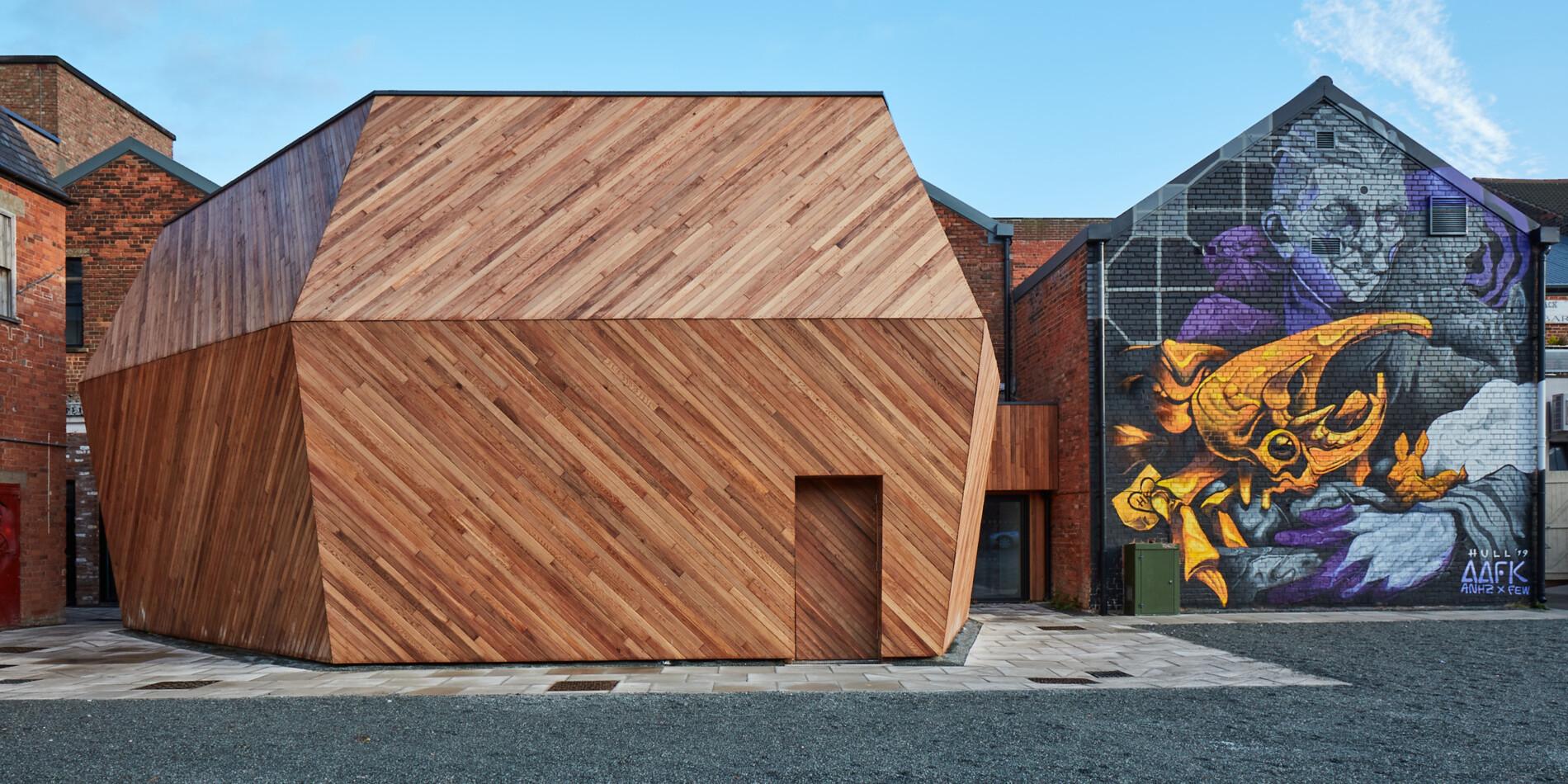
“A faceted Western Red Cedar jewel amongst a sea of historic brick warehouses.” That’s how architect James Lockwood aptly describes this showstopping addition to Hull’s historic Fruit Market quarter, where a onceredundant warehouse has been transformed into a dynamic music venue and creative hub.
The project required a sensitive yet contemporary approach—one that would respect the conservation area’s rich architectural heritage while introducing a bold new element. Western Red Cedar proved to be the ideal material, offering both aesthetic distinction and practical performance.

The Sound of Cedar
Acoustic performance was a primary concern, as the expanded venue needed to prevent sound transfer to the surrounding new developments. A super-insulated timber frame structure, clad entirely in Western Red Cedar, enhances both thermal efficiency and soundproofing. Cedar’s rich tonal range, straight grain, excellent workability, dimensional stability, and remarkable natural durability made it a preferred choice for the complex faceted design. Its weather resistance was also a key factor, ensuring longevity in Hull’s coastal climate.
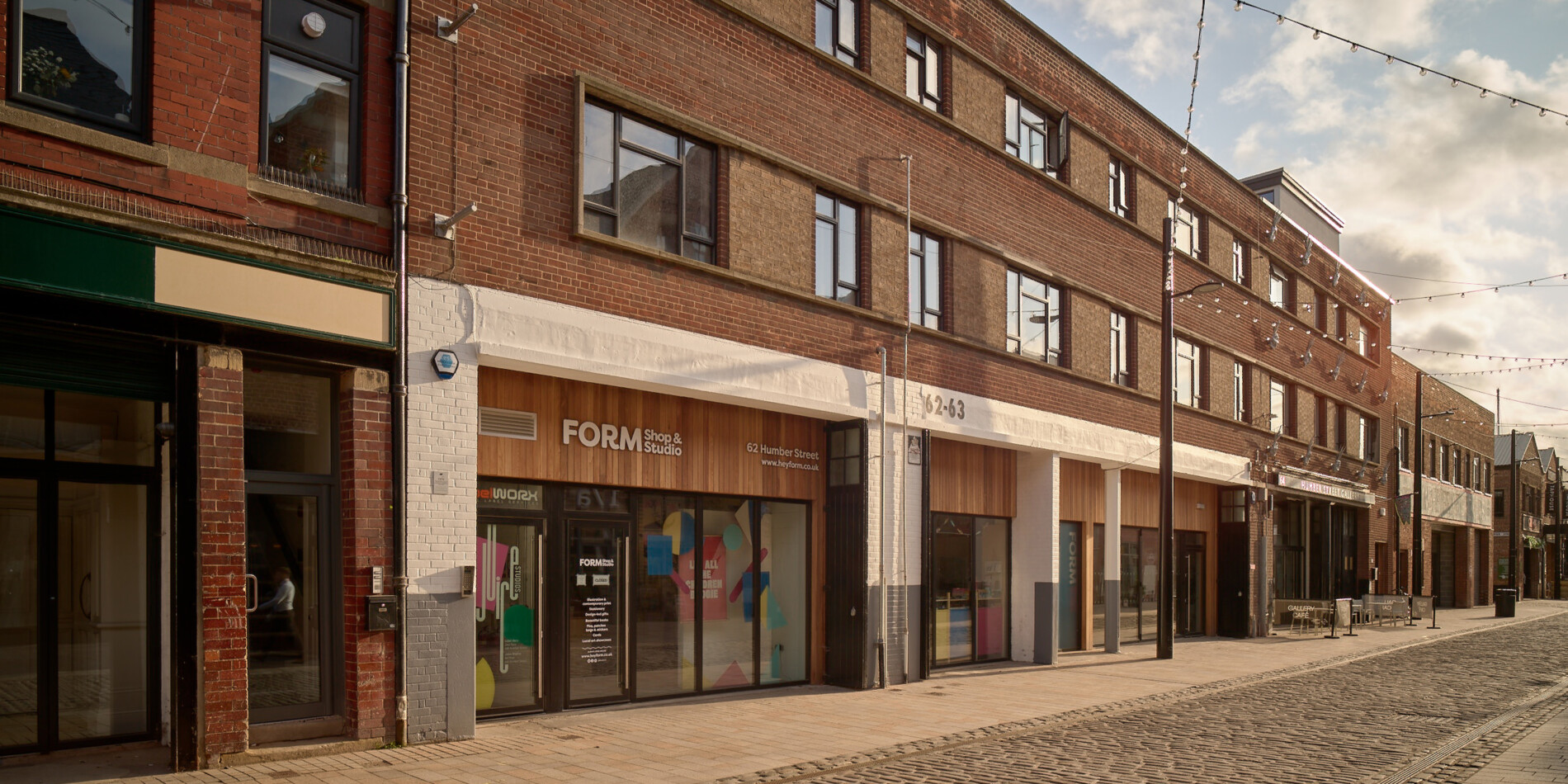
The use of cedar is not limited to the music hall itself but extends across all faceted faces of the rear extension, including the parapet and recessed escape door. To ensure cohesion across the entire scheme, cedar siding was also introduced at high level above the original storefront doors, visually linking the new elements with the existing structure.
Celebrating Urban Harmony
Despite initial reservations about introducing timber in a masonry-dominated streetscape, the architect’s vision ultimately won support.
“The faceted façade would have been difficult to achieve with masonry and would not have offered the visual contrast with its neighboring buildings,” explains Lockwood. “The choice of WRC is both a celebration of natural material and a striking counterpoint that allows its immediate neighbours to shine in their own right.”
The result is a distinctive yet contextual intervention—one that showcases the potential of sustainable building materials in contemporary urban regeneration.
Material Selection: Western Red Cedar Specs
- GRADE KD ‘A’ clear
- SIZE 1×4 (converted from metric)
- FASTENING Stainless steel
- FINISH Clear stain