



Backyard Makeovers that Embrace Natural Beauty
How One Designer Transformed 3 Distinct Spaces into Stunning Retreats
When landscape designer Pete Kiriakopoulos approaches a new backyard project, he isn’t looking to erase the slate and start from zero. Instead, he focuses on leveraging what’s already there—mature trees, existing structures, even neighboring views—to create inviting spaces that feel natural and lived-in.
As a partner and creative director at Studio 1Nine1, Kiriakopoulos’s signature style balances beauty and practicality. Recently, he gave House & Home a tour of three distinct backyard transformations. Each project has its own unique challenges, but all three underscore his thoughtful design philosophy: embrace nature, choose materials wisely, and never compromise on comfort.
Across all these designs, one material consistently stands out for its versatility, durability, and timeless appeal: Western Red Cedar.
“Real Cedar is absolutely the quiet hero of every one of these projects,” Kiriakopoulos explains. “It softens things up incredibly quickly. And it permits creativity—what more could you ask for?”
Courtesy of House & Home
Urban Oasis: Using Nature’s Canvas to Create Contrast
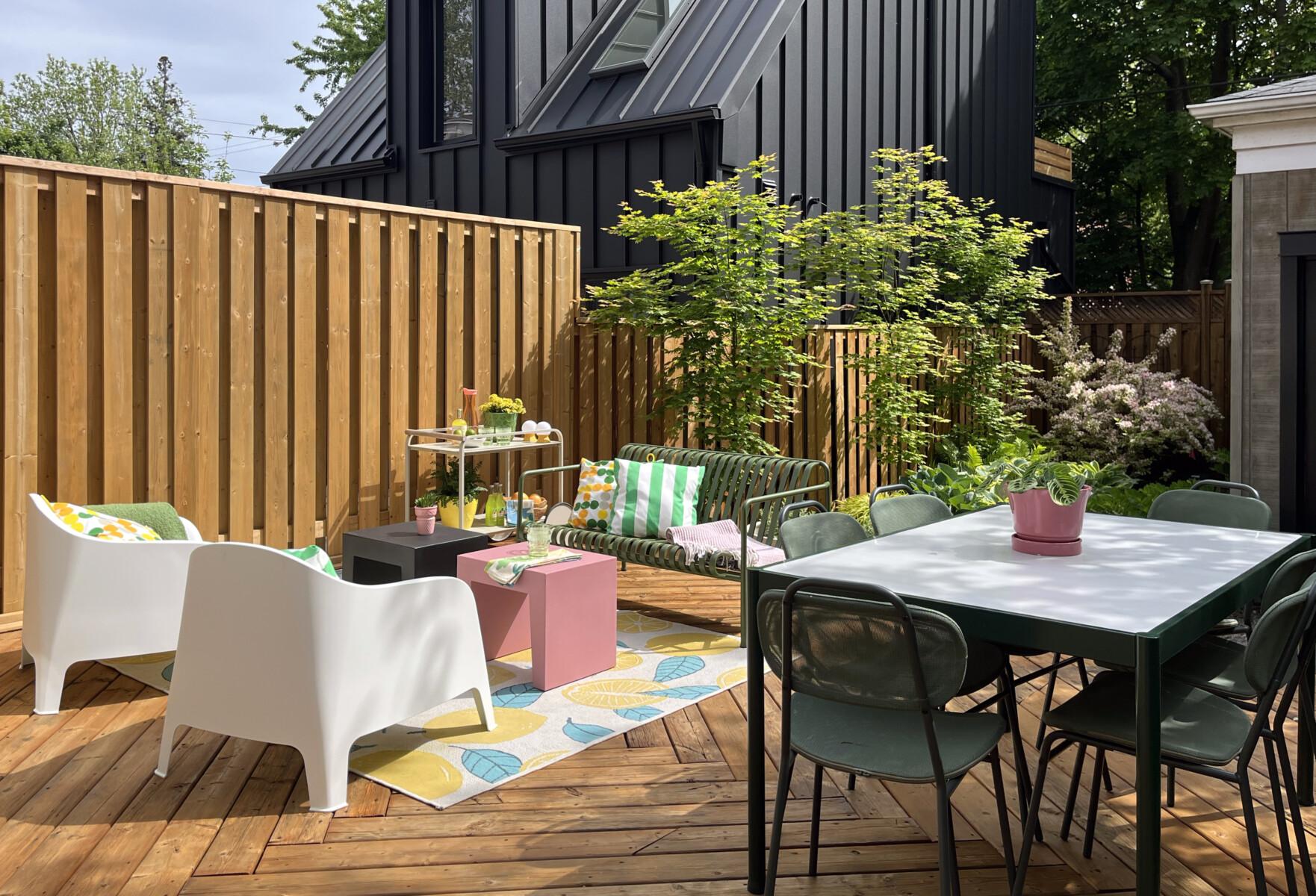
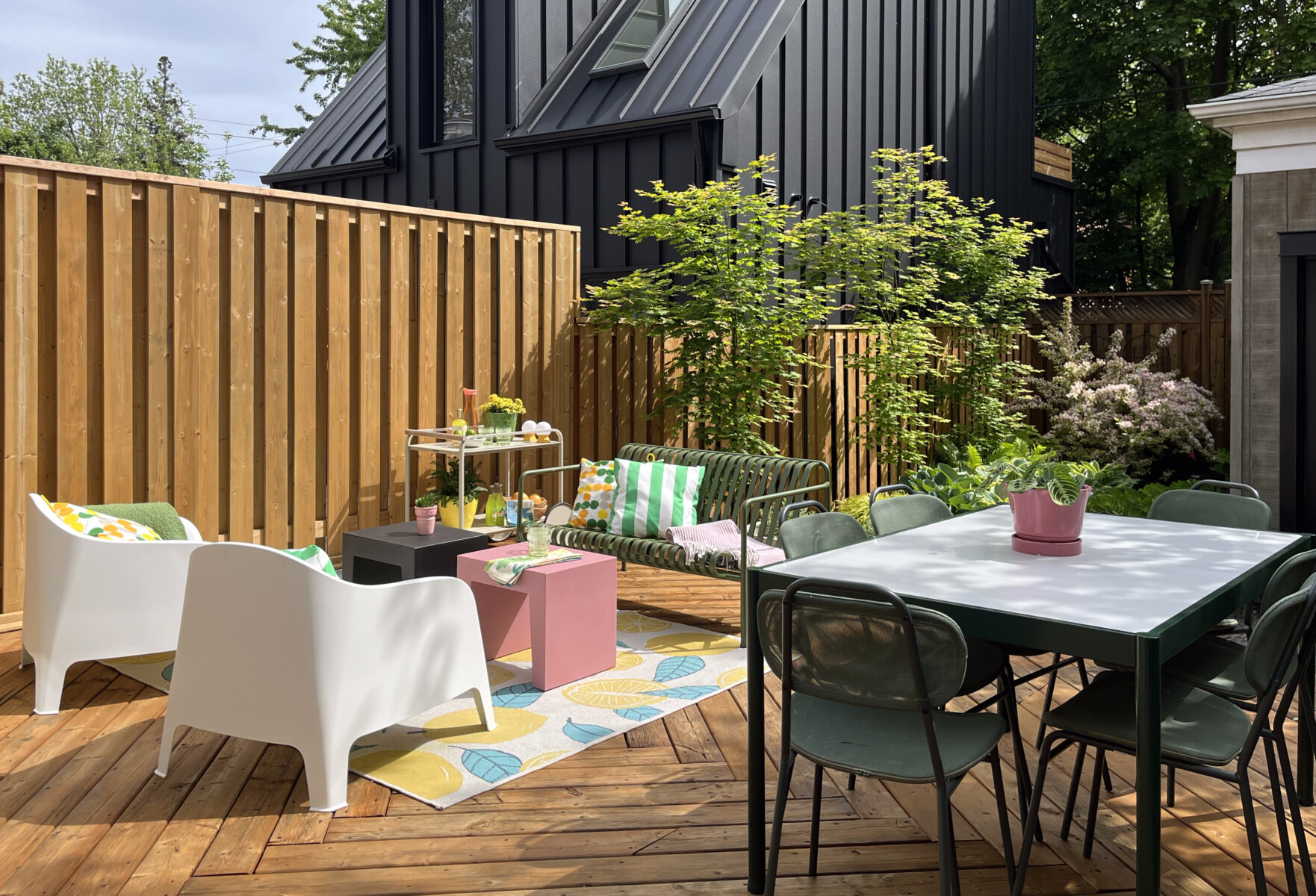
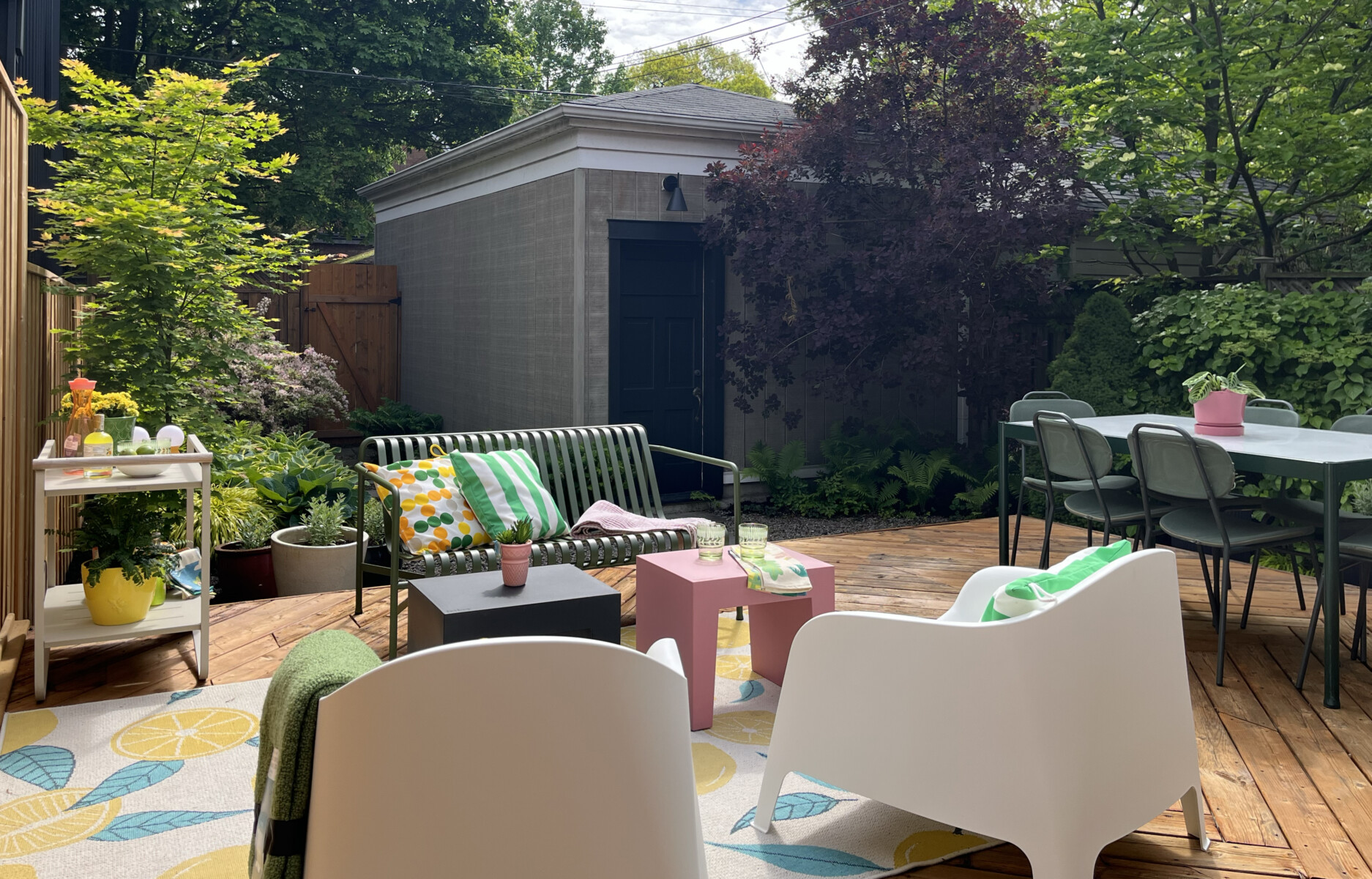
Kiriakopoulos’s first project involved a compact city yard in Toronto, where homeowners needed privacy—without sacrificing airflow or aesthetics. The yard already featured a Western Red Cedar deck—still going strong after 20 years—so he took his cues from that existing element.
He opted for a shadowbox-style cedar fence, often called a “good neighbour fence” because it looks identical from both sides. Not only does it provide complete privacy, but its design allows air to circulate freely. “We’re in the city. We’re very close together. It’s important that air moves through,” Kiriakopoulos explains.
The cedar’s soft, natural tones complement nearby plantings beautifully and create a warm contrast against the neighbor’s black metal laneway house. “It’s the perfect foil for greenery and furnishings,” Kiriakopoulos notes. “This space feels comfortable, natural, and inviting. It feels like home.”
And it’s built to last.
“We used Western Red Cedar just because it’s naturally resistant to rot, decay, and insect damage,” Kiriakopoulos says. “That makes it the perfect material for outdoor projects—as proven by the deck that’s been here for two decades and still looks incredible.”
Suburban Transformation: Updating a Backyard Pool Retreat
The second backyard was a large suburban property facing a common dilemma: deteriorating fencing, an outdated pool area, and a layout that lacked cohesion. Kiriakopoulos’s goal was to restore unity to the space—using cedar fencing as both a functional boundary and a visual
thread that tied the entire yard together.
“We had mature trees and lots of greenery already there,” Kiriakopoulos recalls. “We wanted to echo that natural setting.” He designed a cedar fence that offered privacy at eye level but transitioned to a more open, gapped pattern higher up. The result was a structure that provided seclusion without closing the space off entirely, allowing light and airflow to move freely while taller grasses swayed gently in the breeze.
“Just seeing the grass or the plants moving will make you feel cooler,” Kiriakopoulos says. “It’s an aesthetically beautiful thing as well, too.”
He also updated the pool surround with sleek grey pavers and marble accents that highlight the water’s vibrant turquoise tones. A dated storage structure facing the pool was reimagined as a stylish cabana—bringing new life and function to an existing feature.
In the back corner of the lot, tucked among the greenery, stands a small cedar shed that looks as solid as the day it was built.
“Gosh knows how old that is, and there are no signs of anything other than a natural patina, so we left it in,” says Kiriakopoulos. “When we approach any design, our intent isn’t to tear everything up and make it ours. We want to make sure that the beautiful, durable and substantial parts of the project are maintained wherever we can.”
Small Wonders: Maximizing Space in a Narrow Lot
Kiriakopoulos’s third project was perhaps his most challenging—a narrow, wedge-shaped city backyard plagued by uneven terrain. The uneven grade made the yard seem even smaller, so his first move was to level the entire space, creating a single, open plane.
A cedar landing deck now connects seamlessly to pathways of cobblestone and pea gravel, drawing the eye toward the back of the property. A unique fence made of slender 2×2 cedar pickets gracefully steps downward toward the rear, framing views of neighboring gardens
instead of completely closing them off.
On one side of the fence, a custom cedar bench with built-in storage and planters anchors a cozy seating area. Its design, featuring beautifully handcrafted box joints, underscores Kiriakopoulos’s attention to detail.
“In a space like this, every design decision matters,” Kiriakopoulos says. “We had beautiful gardens next door and lovely neighbors. It made sense to incorporate those views. Cedar allowed us that flexibility.”
Courtesy of House & Home
Pro Tips for Backyard Building & Design
For Kiriakopoulos, working with natural materials is more than a design preference—it’s a guiding principle. He avoids synthetic decking materials, which he finds age poorly and feel uncomfortable. “I’m never going to advocate for composite decking,” he explains. “It cracks,
fades, and gets hot underfoot. Cedar stays cooler, looks better, and ages gracefully.”
It’s also a green choice. Cedar is sustainably harvested and renewable, with a low carbon footprint compared to manufactured alternatives. As a natural material, it even sequesters carbon over its lifetime—actively benefiting the climate rather than contributing to its degradation.
Another practical reason for Kiriakopoulos’s cedar advocacy is simple: builders love it. “If the trades and craftspeople enjoy working with a material, it always leads to better quality and more creative outcomes,” he notes.
Whether designing a cozy urban garden or a spacious suburban retreat, Kiriakopoulos continually returns to cedar’s quiet strength and natural beauty. “It’s the bones of so many projects,” he says. “We’re happy it’s there.”
Inspired to bring the warmth and beauty of Real Cedar into your own outdoor living space? Explore more backyard makeover ideas here.