



Two Award-Winning Projects, Two Very Different Design Goals — One Timeless Building Material

As wood architecture continues to gain momentum in the global conversation around sustainable design, Western Red Cedar remains a material of choice for projects that aim to do more than just perform well — they aim to connect. Connect to place. To culture. To community. To the land.
This year’s Real Cedar Design Award winners — part of the Canadian Wood Council’s 2025 Wood Design & Building Awards — highlight just how versatile and meaningful that connection can be. One project is a home woven into the rugged terrain of the Washington coast. The other is a community hub built on a floodplain within a working agricultural neighborhood. Different programs. Different aesthetics. But both are grounded in the same natural material: Real Cedar.
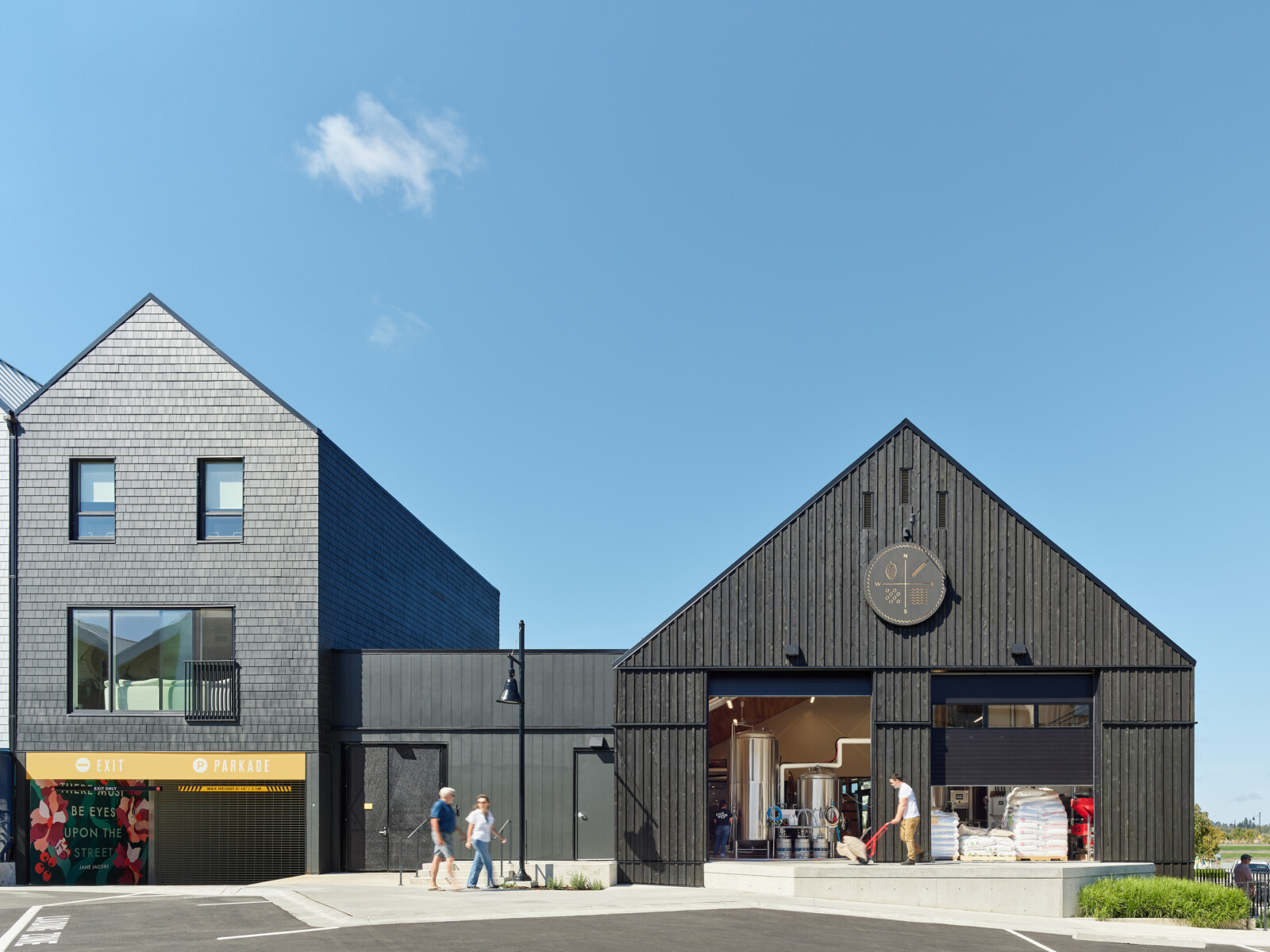
The Granary | MOTIV Architects | Latreille Architectural Photography
The Granary at Southlands — A Community Rooted in the Land
In Tsawwassen, British Columbia, just beyond the dunes of Centennial Beach, a new kind of neighborhood is taking shape — one where homes, restaurants, and public spaces are interwoven with edible gardens, working farmland, and the social rituals of growing, preparing, and sharing food. It’s called Southlands, and at its heart sits The Granary, a mixed-use development by MOTIV Architects that houses a brewery, restaurant, and 35 residential units.
The site is flat, fertile, and just 1.5 meters above sea level — a natural floodplain that required all habitable buildings to be raised several meters above grade. That challenge became an opportunity to explore elevation and form in a way that still felt connected to the earth. Drawing inspiration from barns and grain silos, the design team responded with a series of sharply gabled structures clad in Western Red Cedar — a material deeply tied to the agricultural vernacular of the region.
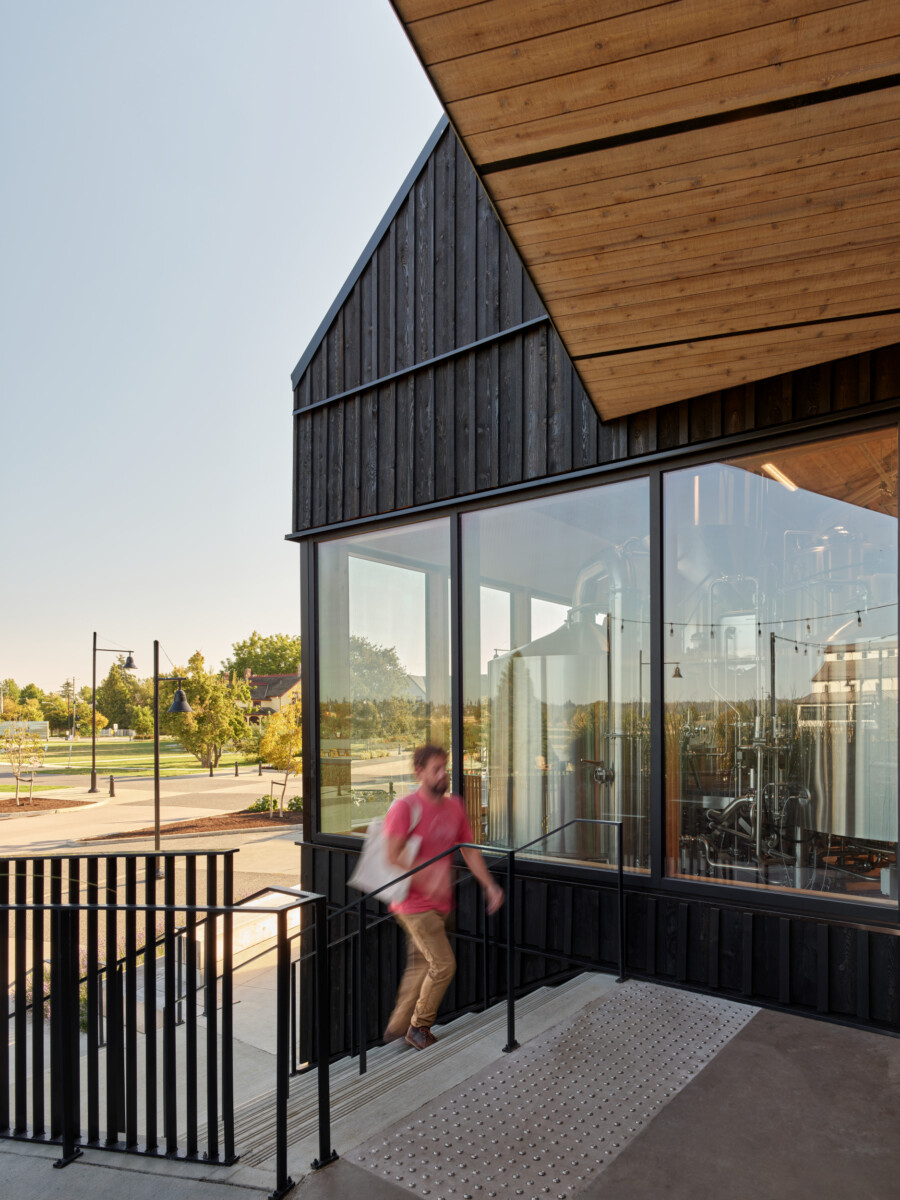
The Granary | MOTIV Architects | Latreille Architectural Photography
The restaurant and brewery, home to Four Winds Brewing, are housed in large volumes with chamfered gables that angle apart to frame a generous terrace. Clad in black-stained board and batten cedar, these forms are bold yet familiar, with a texture and rhythm that echoes traditional farm buildings. Variable board widths and reverse battens with reveals add a level of craft that rewards close inspection.
The residential component takes a quieter approach — smaller gabled volumes wrapped around a central courtyard filled with edible landscaping: blueberries, rosemary, barley, hops. The cedar here is lighter in tone — select knotty shiplap soffits and balcony cladding finished in a washed white stain that softens the geometry and invites touch.
The result is a project that doesn’t just sit within an agricultural landscape — it participates in it. From the materials to the plantings to the communal spaces, everything here is designed to cultivate connection.
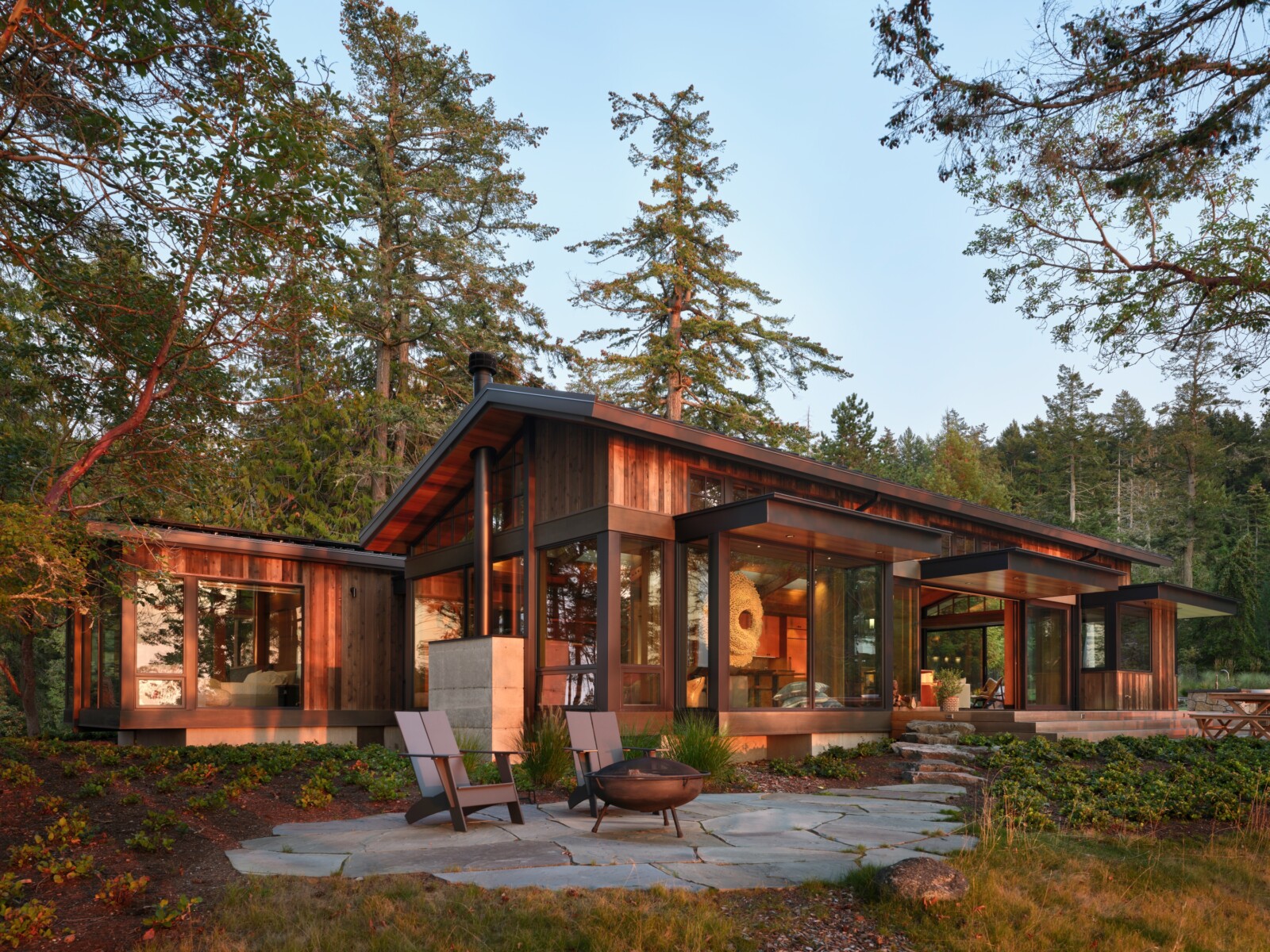
San Juan Islands Residence | Architect: Vandervort Architects | Photography: Benjamin Benschneider
San Juan Islands Residence — Living Lightly at the Edge of Land and Sea
While The Granary finds its strength in community, the San Juan Islands Residence by Vandervort Architects is all about solitude, landscape, and the quiet power of restraint. Located on a pristine, rocky peninsula in Washington state’s San Juan archipelago, the home is surrounded by native vegetation and expansive water views.
Rather than impose on that setting, the architecture defers to it. The home is conceived as a cedar-clad pavilion — a series of volumes organized around views and outdoor spaces, anchored by Douglas fir structural elements and punctuated by blackened shou sugi ban niches that define more intimate zones.

San Juan Islands Residence | Architect: Vandervort Architects | Photography: Benjamin Benschneider
Inside, Western Red Cedar panels wrap walls and ceilings in warmth, their tone deepening the connection to the wooded site. Outside, the material palette shifts to weathered, knotty cedar boards that allow the house to recede into its surroundings — not camouflaged, but quietly in sync.
The design honors indigenous and vernacular building traditions, using rhythm and repetition in the cladding to evoke a sense of continuity with the region’s long history of human habitation. The architects describe the house as a “deliberate response to a specific place,” and cedar plays an essential role in achieving that — not just as a material, but as a medium for storytelling.
It’s also a sustainable choice. As a naturally renewable building material with a low carbon footprint and known biophilic benefits, Western Red Cedar helps the home tread lightly on the land — both environmentally and experientially.
Continued Inspiration
The Real Cedar jury would like to thank everyone who submitted to this year’s awards. As always, the range of work was inspiring — from contemporary expressions to fresh takes on time-honored forms. It’s a powerful reminder of cedar’s versatility and its enduring relevance across styles and scales. We look forward to seeing how designers continue to evolve both modern and traditional architecture through this timeless material.